The best seed starting trays range from simple reusable flats to kits with cells, humidity domes, heat, or grow lights. Choose based on how many seedlings you plan to start, how much control you want over moisture and light, and whether you need individual cells for transplanting.
Quick Top Products
LetPot Smart Seed Starter
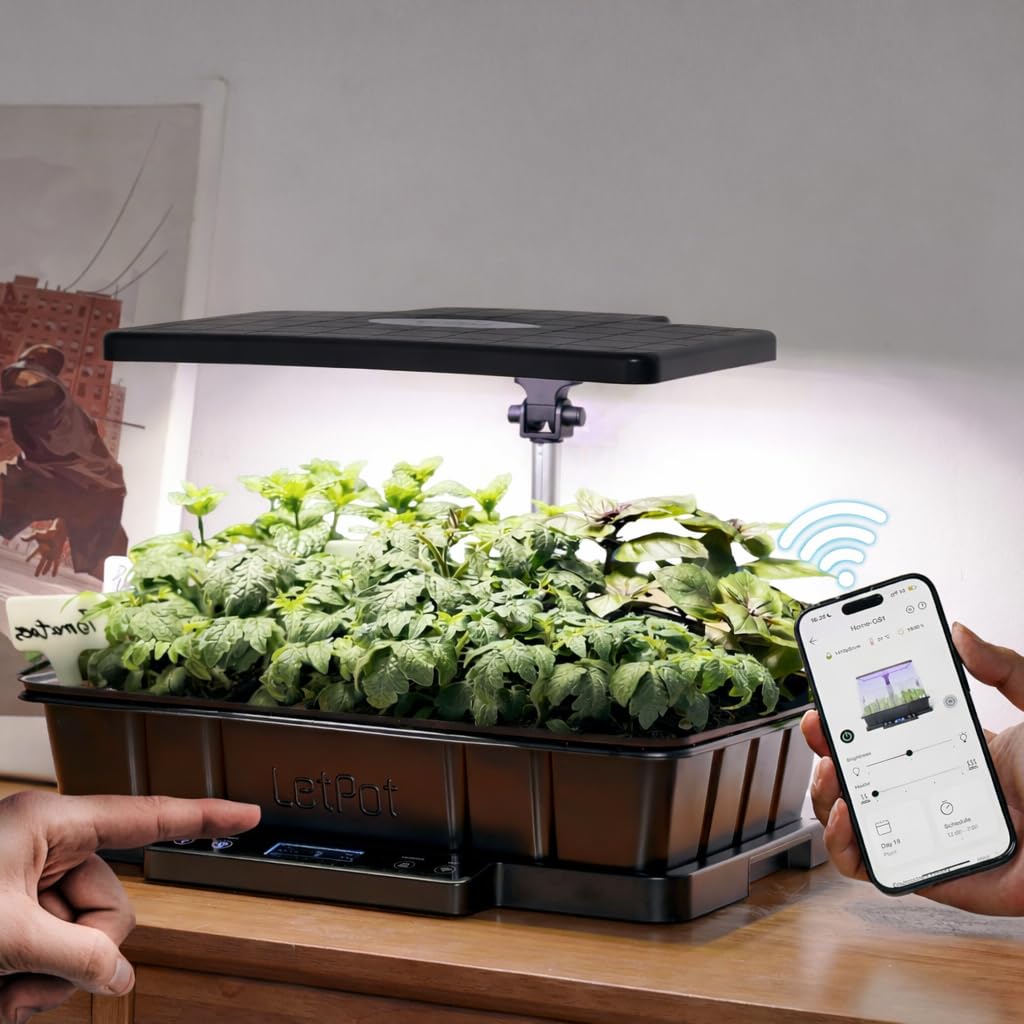
- Combines a 40-cell tray, 24W full-spectrum light, and 24W heating base.
- Monitors soil EC and temperature through the display and app.
- Adjusts light height and rotation for different growth stages.
Best For: Indoor growers who want lighting, heat, and soil monitoring in one integrated kit.

Mr. Pen 10-Pack Seed Starter Tray Kit
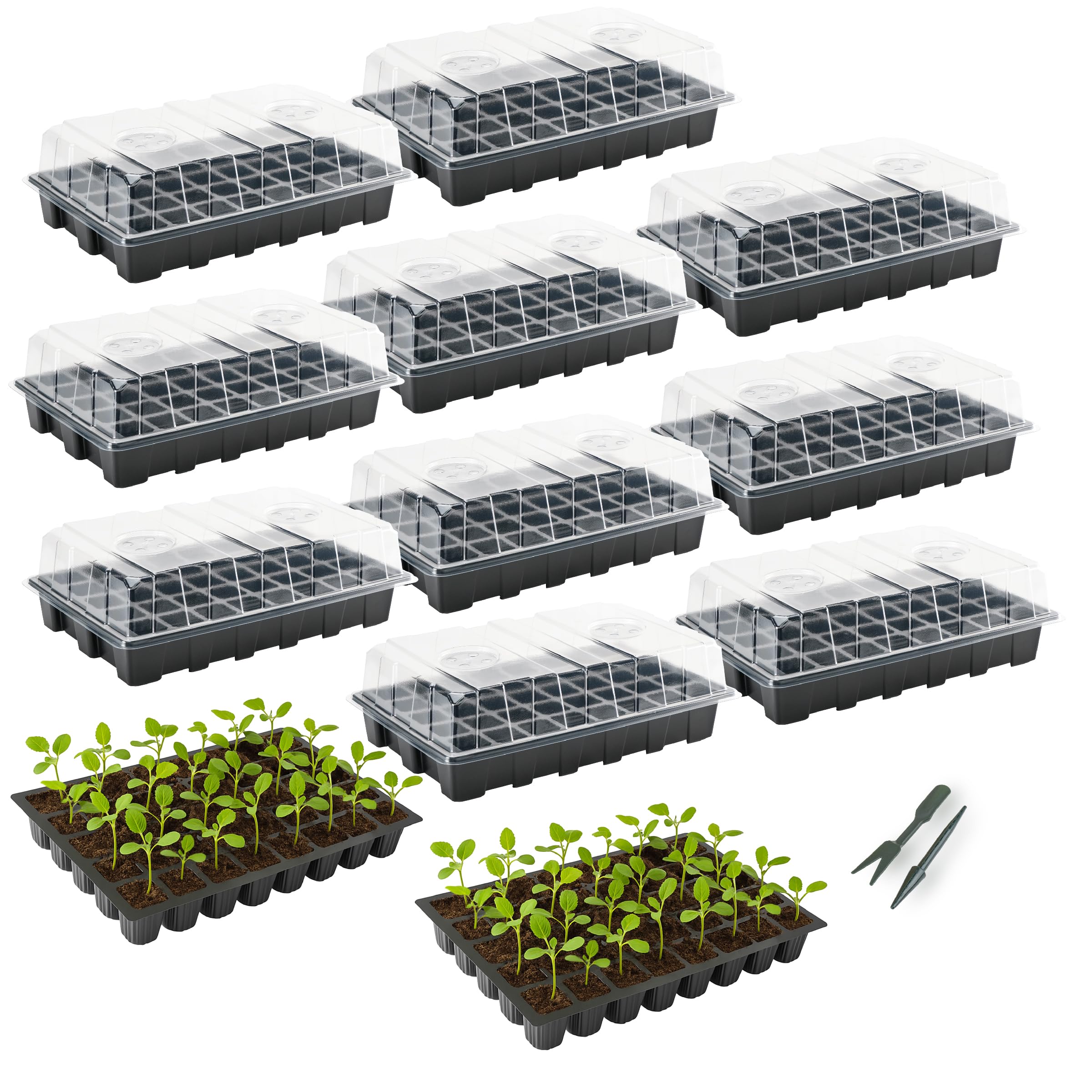
- Provides 400 cells across ten germination trays.
- Includes matching bases and vented humidity domes.
- Comes with tools for sowing and transplanting.
Best For: Gardeners, classrooms, or greenhouse projects that need many covered cells.
Mr. Pen 5-Pack Seed Starter Tray Kit
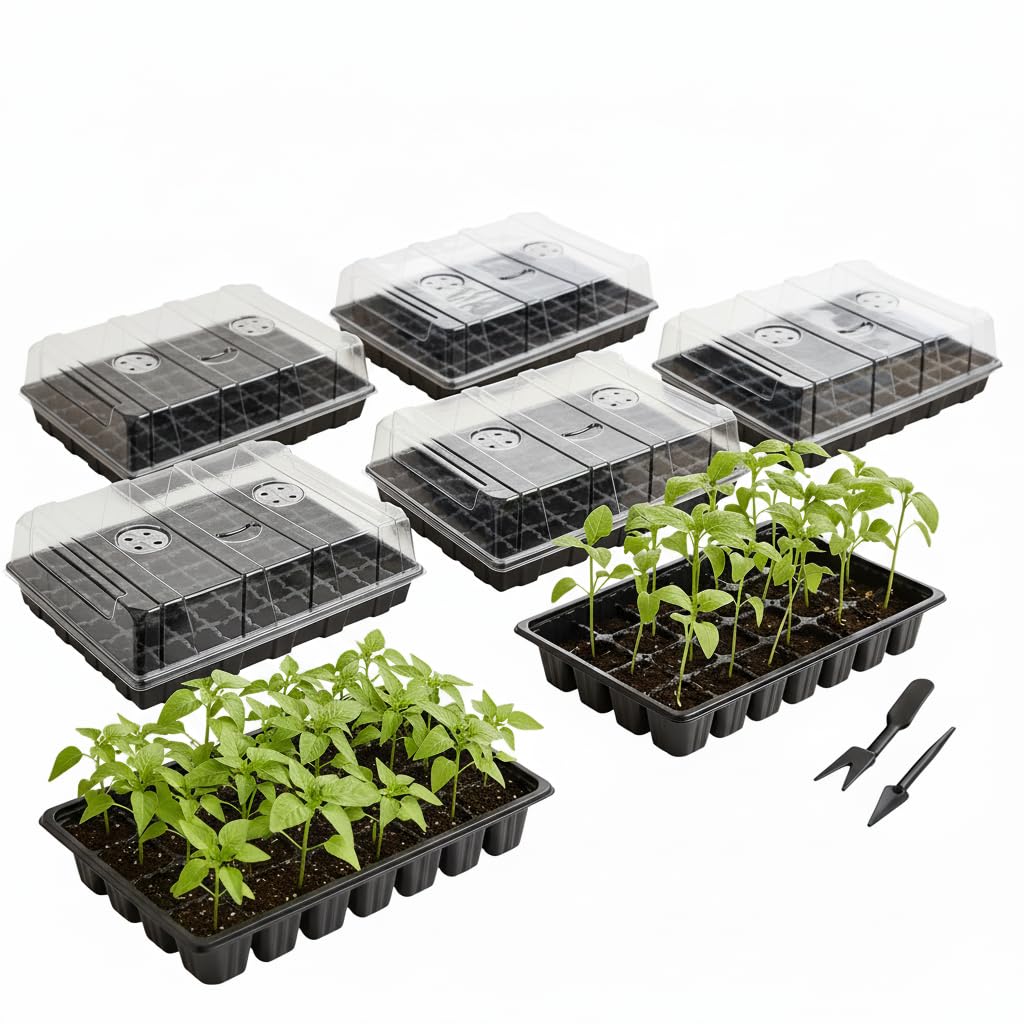
- Five trays provide a total of 350 cells.
- Adjustable dome vents let you manage moisture and temperature.
- Reusable plastic trays suit repeated seasonal starts.
Best For: Home gardeners who want a high cell count in a five-tray set with adjustable vents.
Seedfactor 7-Pack 12-Cell Kit with Grow Light
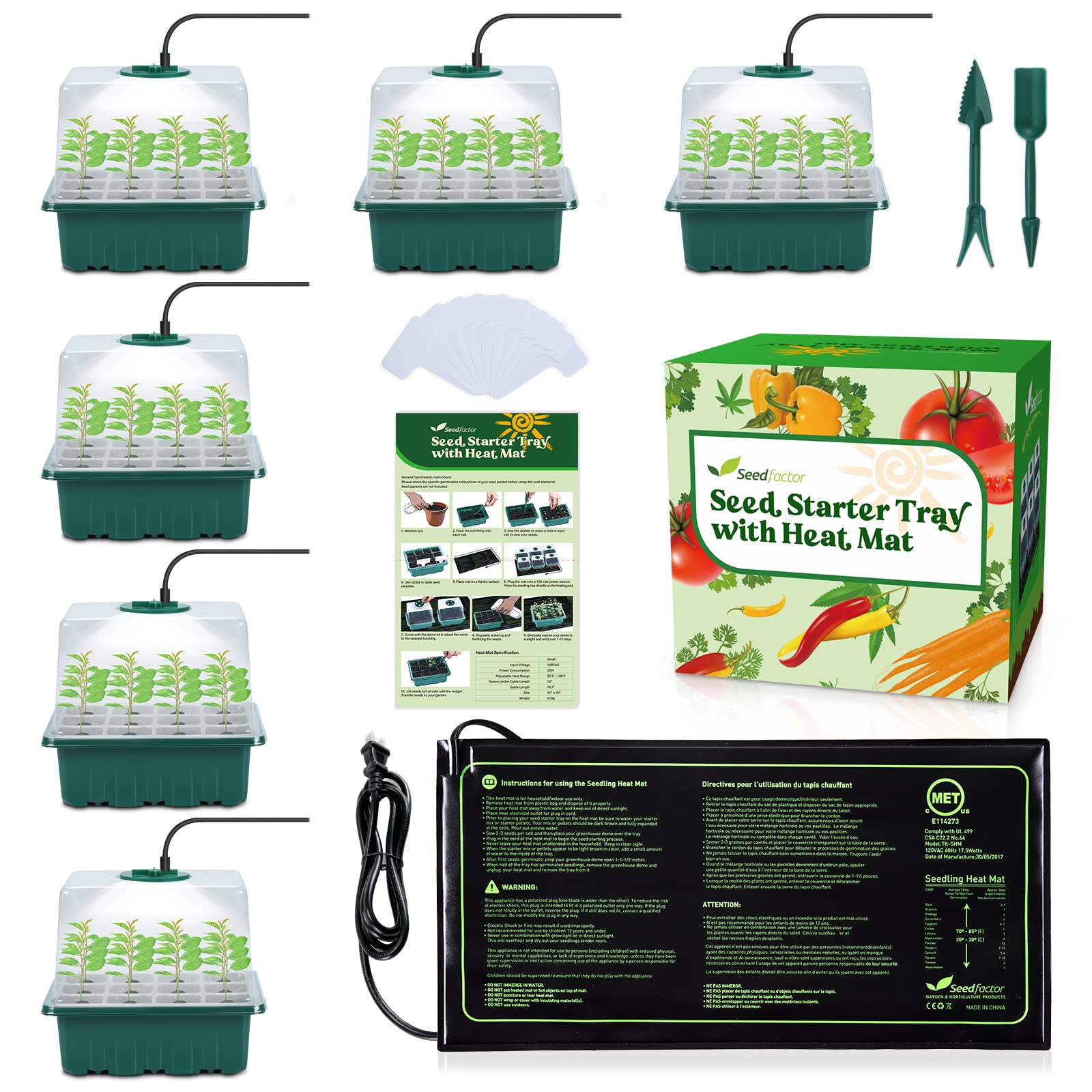
- Includes seven trays with 12 cells each and a grow light.
- Cells measure 1.5-inch squares and 2.1 inches deep.
- Adjustable vents and bottom drainage holes support moisture management.
Best For: Indoor seed starters seeking several small trays with a light and adjustable humidity domes.
Seedfactor 6-Piece Seed Starter Kit with Light
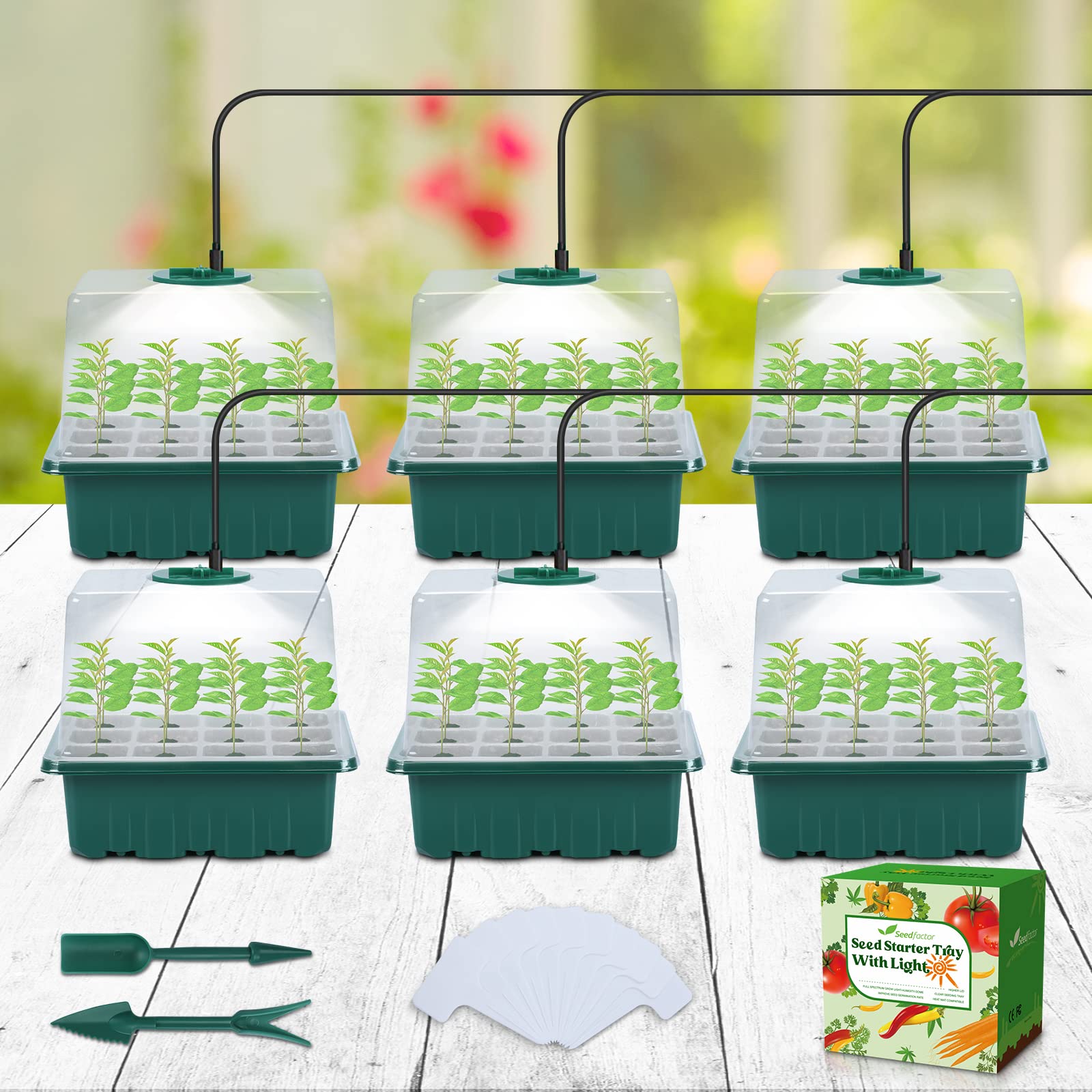
- Includes full-spectrum plant grow lights with adjustable light settings.
- Dome vents adjust the stated humidity range from 50–100%.
- Each insert has 12 cells with drainage holes.
Best For: Indoor growers who want six light-equipped trays and adjustable humidity vents.
Seedfactor 7-Pack 12-Cell Kit with Heat Mat
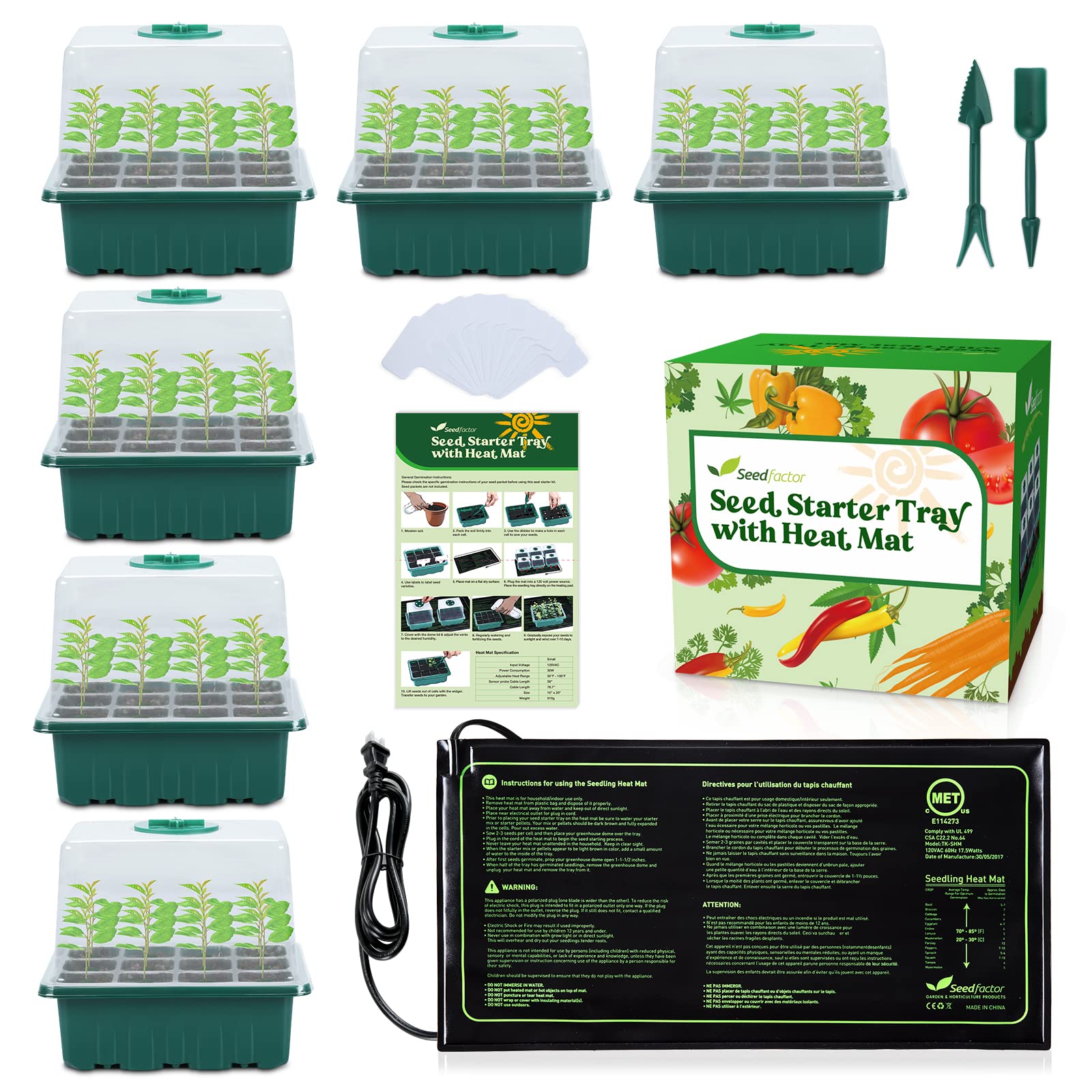
- Includes seven trays with 12 cells per tray and a heat mat.
- Adjustable dome vents help manage humidity.
- Cells have drainage holes and taper for easier removal.
Best For: Seed starters who want a heat mat alongside multiple vented trays.
Mr. Pen 5-Set 15-Cell Tray Kits
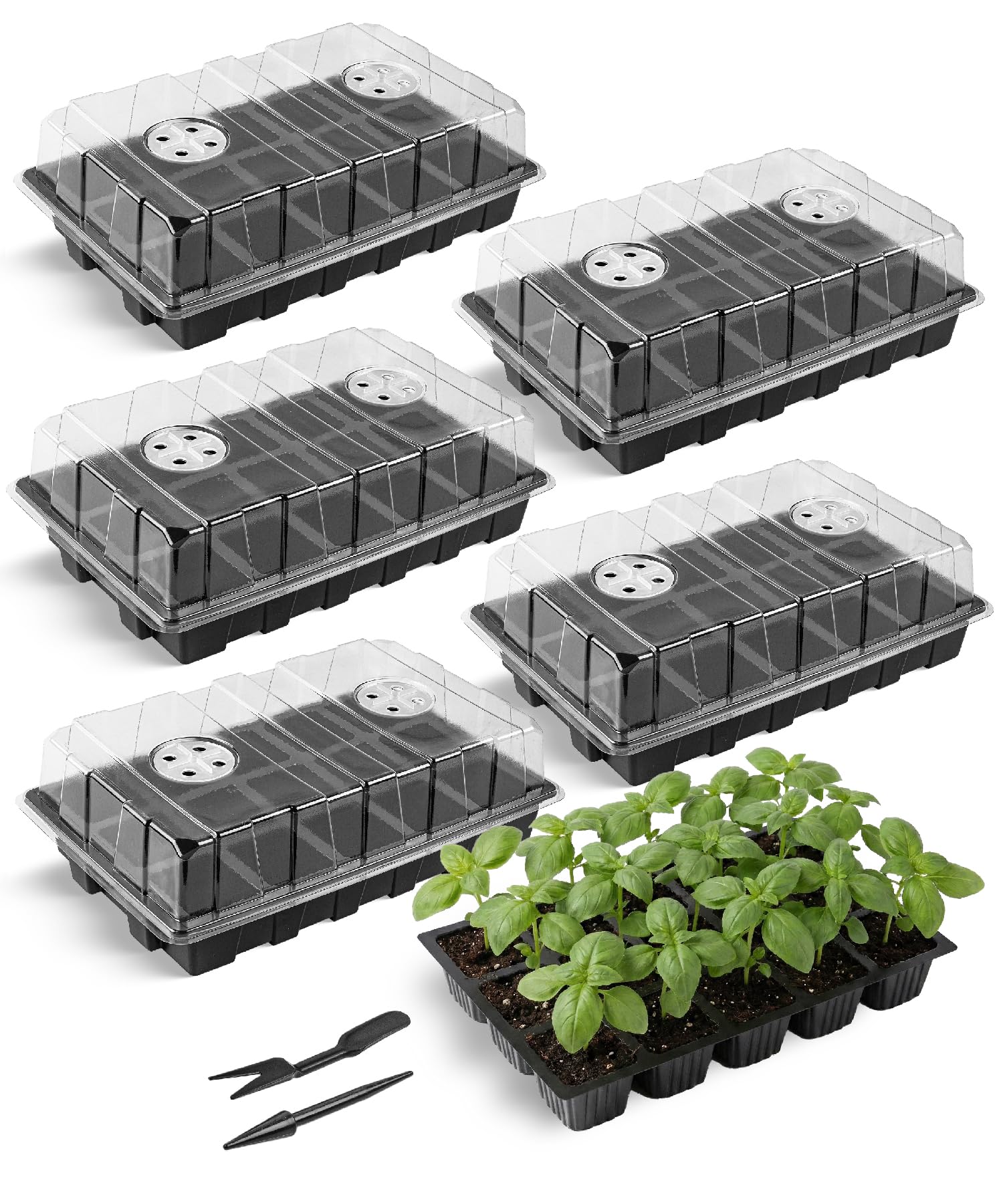
- Five kits each include a 15-cell tray.
- Includes matching bases, vented domes, and planting tools.
- Drain holes at the bottom of individual cells support drainage.
Best For: Gardeners who prefer smaller individual trays with included bases, vented domes, and planting tools.
Mr. Pen 5-Pack Seed Starter Trays
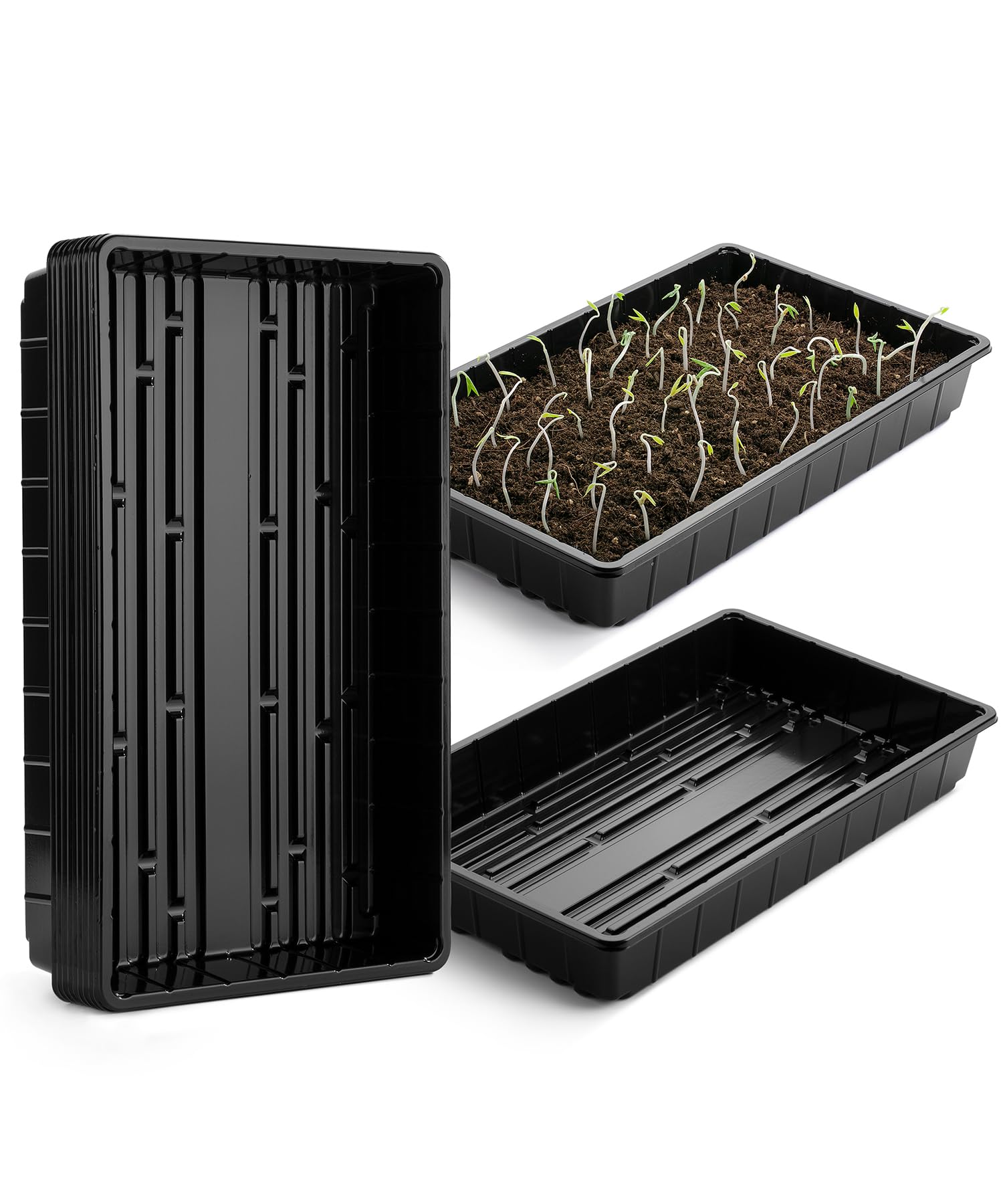
- Five trays measure 17 x 10 x 2.4 inches.
- Reusable flats work for seeds, sprouts, and microgreens.
- Raised edges and a one-piece design support tidy handling and cleaning.
Best For: Gardeners who want simple reusable flats for seed work, microgreens, or general potting tasks.
Smart Indoor Growing Controls
LetPot Smart Seed Starter with Humidity Dome, Germination Kit with Waterproof Seedling Mat, 24W Full Spectrum LED Grow Light, Smart Heating Base, EC Soil Sensor & App Control for Indoor Seed Starting
This LetPot kit combines a 40-cell tray with a 24W full-spectrum grow light, a 24W heating base, an adjustable humidity dome, and soil EC and temperature sensors. Touch controls and an app manage lighting schedules, temperature settings, and growth modes, while the light panel adjusts in height and rotates.
Included grow sponges allow seedlings to move without disturbing roots. This is the most feature-rich option here for countertop seed starting, but its integrated electronics and app controls may be more than a gardener needs for a basic spring batch.
It is designed for indoor use and reusable year-round.
Best For: Indoor growers who want lighting, heat, and soil monitoring in one integrated kit.
| Pros | Cons |
|---|---|
|
|
Choose this kit if you want one countertop system for light, heat, humidity, and soil monitoring. The 40 cells and included sponges make it useful for organized starts and cleaner transfers.
Its tradeoff is reliance on powered features and app-based options when a basic tray may suit simpler batches. Check that the unit fits your shelf or counter, and confirm how you want to use the soil sensors and growth settings before buying.
Large Batch Kit with 400 Cells
Mr. Pen- Seed Starter Tray Kits, 10 Pack, Total 400 Cells | Durable Plant Germination Trays with Humidity Vented Domes and Bases, Ideal for Seed Starting
This 10-pack includes 400 cells across ten germination trays, with matching bases and clear humidity domes. The domes help retain warmth and humidity while keeping seedlings visible, and the kit includes a dibber and widger for sowing and transplanting.
That combination suits a large spring planting plan or a shared classroom project where separate covered trays help keep varieties organized. It does not include a grow light or heating mat, so plan those separately if your starting area needs added light or warmth.
Its high cell count is the defining reason to choose it over a smaller tray set.
Best For: Gardeners, classrooms, or greenhouse projects that need many covered cells.
| Pros | Cons |
|---|---|
|
|
Pick this set when you need many individual starts and want bases, domes, and transplanting tools in one purchase. Its 400-cell capacity is far more than a small windowsill batch may require, and the kit does not provide powered lighting or heat.
Before buying, consider where ten trays will sit and whether your seedlings need supplemental equipment. The clear covers help visibility, while the separate bases give each tray a ready collection layer.
Compact Kit with 350 Cells
Mr. Pen- Seed Starter Tray Kit, 5 Pack, Total 350 Cells | Durable Plant Germination Trays with Humidity Vented Domes and Bases, Ideal for Seed Starting
This Mr. Pen set packs 350 cells into five seed-starting trays and includes humidity domes with adjustable vents. The transparent lids help retain warmth and moisture while keeping seedlings in view, and the trays are made from reusable plastic.
It is suited to gardeners starting several varieties who want a substantial number of individual cells without handling ten separate trays. The record does not give cell dimensions or mention a grow light or heat source, so check the fit for your seeds and plan your lighting separately.
Its balance of five trays and a high total cell count makes it a flexible batch option.
Best For: Home gardeners who want a high cell count in a five-tray set with adjustable vents.
| Pros | Cons |
|---|---|
|
|
Consider this set for multi-variety planting when 350 cells sound useful but ten separate trays would take too much handling. Adjustable vents offer moisture control, and reusable plastic supports repeated starts.
Since cell size is not given, make sure it suits the seeds you intend to sow. Also plan for light and warmth independently if your growing location needs them; this set focuses on trays and humidity covers.
Starter Set with Grow Light
7-Pack Seed Starter Kit with Grow Light (12 Cells per Tray), Plant Germination Trays with Adjustable Humidity Dome Seed Trays Seedling Starter with Base Trays for Germination
Seedfactor's seven-tray kit uses 12-cell inserts with bases and clear humidity domes, paired with a grow light. Each cell is described as a 1.5-inch square and 2.1 inches deep, giving a concrete sizing reference for planning small or larger seeds.
The domes have adjustable vents, and the inserts include drainage holes; the clear covers keep seedlings visible. This setup fits indoor growers who want light included and prefer several compact trays over one large flat.
The notes do not state the light's wattage or whether a heat mat is included, so verify those needs before choosing it for a particular location.
Best For: Indoor seed starters seeking several small trays with a light and adjustable humidity domes.
| Pros | Cons |
|---|---|
|
|
Choose this option if you want multiple compact covered trays and a grow light in one kit. The stated cell dimensions help you judge whether the inserts fit your seed sizes, while the drain holes and vents give useful control over wetness and airflow.
The light's output is not specified, and a heat mat is not confirmed, so check those details if supplemental light or warmth is central to your setup. Seven small trays can also be easier to separate by variety than one large flat.
Six Covered Trays with Grow Lights
Seed Starter Tray with Light, 6PCS Seed Starter Kit with Grow Light, Seedling Starter Trays with Humidity Domes, Covers Height 3.9", Indoor Gardening Plant Germination Trays
This six-piece Seedfactor kit combines seedling trays with full-spectrum grow lights and transparent humidity domes. The lights are described as adjustable for quality, intensity, and cycle, while dome vents allow humidity adjustment from 50–100%.
Each tray has a 12-cell insert, drainage holes, and cells measuring 1.5 inches square by 2.1 inches deep. The package therefore pairs individual starts with lighting and humidity management in a compact indoor format.
The notes do not identify light wattage or a heat mat, so check those details if your growing area is especially dim or cool.
Best For: Indoor growers who want six light-equipped trays and adjustable humidity vents.
| Pros | Cons |
|---|---|
|
|
This kit suits indoor gardeners who want a light-equipped setup divided into six trays. The 12-cell inserts, drainage holes, and adjustable vents support organized starts, and the specified cell dimensions help with planning.
Its main uncertainty is the light's output; the notes also do not confirm a heat mat. Check whether the light setup and the trays' footprint work for your shelf, and whether you need a separate source of warmth.
Covered Trays with Heat Mat
7-Pack Seed Starter Tray with Heat Mat (12 Cells per Tray), Plant Germination Trays with Adjustable Humidity Dome Seed Trays Seedling Starter with Base Trays for Germination
This Seedfactor kit includes seven 12-cell trays with bases and clear humidity domes, plus a heat mat. The domes have adjustable vents, while each cell measures 1.5 inches square and 2.1 inches deep.
Drainage holes and tapered cells support moisture management and easier seedling removal. The covered trays work for indoor starts, propagation, and small plant cuttings.
The product title identifies a heat mat, but the notes do not establish its exact specifications; the mentioned grow-light text does not clarify whether a light is included in this version. Verify the kit contents and mat details if you need a complete setup.
Best For: Seed starters who want a heat mat alongside multiple vented trays.
| Pros | Cons |
|---|---|
|
|
Choose this set if adding warmth is a priority and you want several covered trays with defined cell sizes. The seven 12-cell inserts provide room for multiple varieties, while the domes and drainage holes support moisture control.
Before buying, verify the heat mat's size and settings and confirm the light contents, since the notes combine light-related language with the heat-mat version. That check determines whether you need to budget space and equipment separately.
Smaller 15-Cell Covered Trays
Mr. Pen 5-Set Seed Starter Tray Kits | Durable Plant Germination Trays with Humidity Vented Domes and Bases, Ideal for Seed Starting, Indoor Gardening
This Mr. Pen set includes five 15-cell germination trays, matching bases, humidity vented domes, and a shovel and scoop. The individual cells have bottom drain holes, while the clear domes allow visibility and airflow adjustments.
Compared with larger-cell-count options, the 15-cell format lends itself to smaller batches or dividing varieties across separate covered trays. Durable plastic forms the trays and bases.
The notes do not provide cell dimensions, so confirm that the size suits your seeds before ordering. There is no grow light or heat source identified among the included pieces.
Best For: Gardeners who prefer smaller individual trays with included bases, vented domes, and planting tools.
| Pros | Cons |
|---|---|
|
|
Pick this set for modest, separated batches where five smaller covered trays are more practical than a high-capacity flat. Bases, vents, drain holes, and the included shovel and scoop provide a useful starting set of accessories.
The lack of cell measurements makes seed-size fit harder to judge, so check dimensions before purchase. Plan for separate light or heat if your indoor growing area calls for either.
Reusable Open Flats for Flexible Uses
Mr. Pen- Seed Starter Trays, 5 Pack, 17"x10"x2.4" | Durable Plastic Growing Trays, Stackable and Reusable Seedling Starter Kits for Indoor, Outdoor, Greenhouse Gardening
These Mr. Pen trays are open flats measuring 17 x 10 x 2.4 inches, with raised edges to contain soil, fertilizer, and water. Their one-piece design is easy to clean and reuse, and the trays can serve for seed germination, sprouts, microgreens, potting, or soil mixing.
They are compatible with heat mats, humidity domes, and hydroponic systems, though those accessories are not included in the stated package details. This is a flexible base tray rather than a divided-cell kit, so it suits growers who want adaptable space or already have inserts and covers.
Check what accessories you need for your chosen method.
Best For: Gardeners who want simple reusable flats for seed work, microgreens, or general potting tasks.
| Pros | Cons |
|---|---|
|
|
Choose these flats if you want adaptable tray space for microgreens, sprouting, soil mixing, or use with separate inserts. Their stated dimensions give you a clear footprint to plan around, and raised edges help contain material.
They do not provide individual cells or covers as part of the described tray format, so they require a different workflow from covered plug trays. Check compatibility with any inserts or domes you plan to use.
How to Choose Seed Starting Trays
How We Picked Seed Starting Trays
This group focuses on products intended to germinate plant seeds, from reusable flats to covered cell kits and indoor systems with lights or heat. We included options for small batches, large planting plans, transplanting, and countertop growing.
A bird-feeder seed tray does not serve this purpose, so it is excluded.
Cell count is only one part of the choice. Cell dimensions, drainage, humidity control, included bases, and whether light or heat is provided determine how a tray fits a planting routine.
Where a key dimension or accessory detail is unspecified, check it before buying.
Comparing Seed Starting Trays
The products split into open flats and plug-style trays. The Mr. Pen open flats offer flexible space for microgreens or potting work, while the 15-cell, 12-cell, 350-cell, and 400-cell kits separate seedlings into individual starts.
For a large planting plan, the 400-cell pack maximizes capacity; the five-tray 350-cell kit reduces the number of separate trays while retaining a high cell count.
Indoor kits add different levels of control. LetPot combines light, heat, app controls, and soil monitoring in one system.
Seedfactor options add either a grow light or a heat mat alongside vented domes. Confirm exact light and heat contents for the version you select, since these features change whether additional equipment is needed.
| Product | Standout features | Best for |
|---|---|---|
| LetPot Smart Seed StarterCheck Price |
| Indoor growers who want lighting, heat, and soil monitoring in one integrated kit. |
| Mr. Pen 10-Pack Seed Starter Tray KitCheck Price |
| Gardeners, classrooms, or greenhouse projects that need many covered cells. |
| Mr. Pen 5-Pack Seed Starter Tray KitCheck Price |
| Home gardeners who want a high cell count in a five-tray set with adjustable vents. |
| Seedfactor 7-Pack 12-Cell Kit with Grow LightCheck Price |
| Indoor seed starters seeking several small trays with a light and adjustable humidity domes. |
| Seedfactor 6-Piece Seed Starter Kit with LightCheck Price |
| Indoor growers who want six light-equipped trays and adjustable humidity vents. |
| Seedfactor 7-Pack 12-Cell Kit with Heat MatCheck Price |
| Seed starters who want a heat mat alongside multiple vented trays. |
| Mr. Pen 5-Set 15-Cell Tray KitsCheck Price |
| Gardeners who prefer smaller individual trays with included bases, vented domes, and planting tools. |
| Mr. Pen 5-Pack Seed Starter TraysCheck Price |
| Gardeners who want simple reusable flats for seed work, microgreens, or general potting tasks. |
Choosing Cell Trays for Seed Germination
Cell dimensions affect how much growing medium each seedling gets and how easy it is to handle before transplanting. The Seedfactor 12-cell trays specify 1.5-inch square cells with 2.1-inch depth, useful details when matching a tray to seeds and shelf space.
Cell sizes are not given for the Mr. Pen 15-cell and 350-cell kits or the 400-cell set, so those buyers should check dimensions before purchase.
Drainage holes help excess water leave individual cells; bases collect runoff, while clear domes retain humidity and keep growth visible. Adjustable vents make it easier to change airflow as seedlings develop.
An open flat gives more flexibility for microgreens or mixed tasks, but it does not separate plants into plugs.
Grow Lights, Heat Mats, and Humidity Covers
A covered seed tray can help manage moisture, but it does not provide light unless a lamp is included. Seedfactor's light-equipped kits pair full-spectrum lights with adjustable domes, while its heat-mat kit adds warmth and requires confirmation of mat specifications.
LetPot integrates both light and heat with app controls, but its feature set is more involved than a passive tray and dome.
Consider where the trays will sit and what equipment that spot already has. A bright shelf may make a separate light unnecessary, while a cooler indoor location can make a heat mat useful.
Check included components closely so the tray, lamp, mat, and power arrangements fit your intended setup.
Who Should Buy Which Seed Starting Tray
Choose the LetPot system if you want integrated lighting, heating, and soil monitoring for indoor starts. For many seedlings across multiple varieties, the Mr. Pen 400-cell set offers the largest stated capacity; the 350-cell five-pack is another high-capacity format with fewer trays.
Gardeners with smaller batches can consider the Mr. Pen 15-cell sets, while the Seedfactor 12-cell kits offer compact covered trays with a light or heat-mat variant.
For flexible microgreens, sprouting, or potting, the open Mr. Pen flats provide a reusable work surface. Match your choice to cell dimensions, available shelf space, and the equipment you already have.